Introduction to the UWB Module
In today’s fast-paced digital world, efficient and precise wireless communication is becoming increasingly important. One technology that stands out in this realm is the UWB module, or Ultra-Wideband technology. UWB technology has garnered attention for its capability to deliver high-speed data transmission and exceptional location accuracy. As businesses and individuals strive for improved connectivity solutions, understanding UWB’s inner workings, its benefits, applications, and the future landscape is essential for harnessing its potential effectively.
What is a UWB Module?
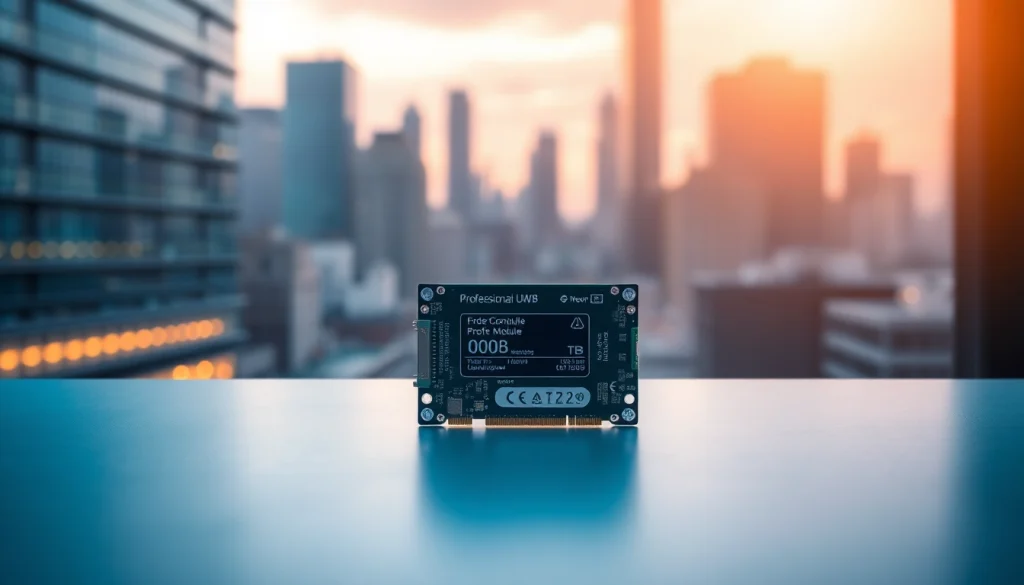
A UWB module utilizes Ultra-Wideband technology, defined by its ability to transmit signals over a wide frequency range—typically more than 500 MHz. Unlike traditional wireless communication systems that operate on narrow frequency bands, UWB uses a vast bandwidth, allowing it to send large amounts of data quickly and with minimal power consumption. Initially developed for radar and military applications, UWB modules are now gaining traction across various commercial sectors, including consumer electronics, automotive, and IoT devices.
Working Principles of UWB Technology
At its core, UWB systems operate by sending short bursts of radio frequency signals over a spectrum of frequencies. Unlike conventional methods that rely on the amplitude of the signal, UWB technology utilizes the time domain, allowing it to discern minute timing variations and achieve high precision in positioning and data transmission.
The signal’s brief pulses lead to lower energy consumption, enhancing its efficiency. UWB can penetrate through walls and obstacles, making it particularly useful in complex environments. This characteristic enables accurate real-time location services (RTLS), which is critical for sectors such as healthcare, manufacturing, and smart home applications.
Key Characteristics of UWB Modules
- High Precision: UWB can achieve localization accuracy within centimeters, surpassing traditional GPS and RF systems, which can have an accuracy of several meters.
- Low Power Consumption: Designed for short-range applications, UWB modules operate effectively with minimal energy, extending device battery life.
- Multi-User Capability: UWB can handle multiple devices in the same area without interference, which is essential for dense environments like smart homes or industrial settings.
- Secure Data Transmission: UWB’s unique signaling method enhances security by enabling precise direction finding and distance measurements.
Benefits of Using UWB Modules
Enhanced Accuracy in Location Tracking
The hallmark of UWB technology is its exceptional accuracy in location tracking. In applications such as asset management and personnel tracking within large facilities, UWB can pinpoint objects with remarkable precision. For instance, UWB modules can find a lost tool on a manufacturing floor immediately, reducing downtime and improving operational efficiency.
Low Power Consumption Advantages
Power efficiency is a critical concern as devices become increasingly compact and portable. UWB excels in this area, allowing for lower battery consumption compared to Wi-Fi and Bluetooth. Devices powered by UWB can maintain functionality for longer periods, making them ideal for mobile and wearable technologies where battery life is paramount.
Secure Data Transmission Features
Security remains a top priority for developers and end-users alike. UWB technology offers robust security features due to its low transmission power and the way it operates across a broad spectrum. This combination helps mitigate the risks of eavesdropping and data interception, thereby ensuring secure communication channels for sensitive data transfer.
Applications of UWB Modules
Smart Home Integration with UWB Modules
As smart home technology continues to expand, UWB modules play a pivotal role in enhancing inter-device communications. With UWB, devices like smart locks, light switches, and environmental sensors can communicate flawlessly without interference. Furthermore, UWB facilitates accurate positioning for applications such as automatic door unlocking based on user proximity, creating a seamless and user-friendly experience.
Industrial Uses and IoT Connections
The integration of UWB in industrial settings has proven beneficial for tracking equipment, employees, and materials. In factories, UWB modules can facilitate efficient resource management. For instance, by precisely locating forklifts and pallets, businesses can streamline their operations, minimize cycle times, and improve safety protocols. The UWB’s mesh networking capabilities further enhance its utility in connected IoT environments, allowing for real-time data exchange and decision-making.
UWB in Automotive Navigation Systems
In the automotive sector, UWB technology is revolutionizing navigation systems and vehicle keyless entry solutions. UWB’s capacity for precise indoor and outdoor positioning allows for enhanced navigation capabilities. Additionally, UWB-equipped keys can ensure that car doors unlock only when the authorized user is in proximity, significantly improving vehicle security.
Implementing UWB Modules in Your Projects
Steps for Integrating UWB Technology
Integrating UWB technology into your projects requires careful planning and execution. Here are key steps to consider:
- Define Objectives: Clearly outline the goals of your UWB application, including precision requirements, power constraints, and the specific environment in which it will operate.
- Select Suitable Hardware: Choose UWB modules that meet your project’s specifications, considering factors like range, power consumption, and compatibility with existing systems.
- Develop Software Solutions: Create software that can process UWB data, implementing algorithms for accurate positioning and data management.
- Conduct Testing: Assess the performance of the UWB system in real-world scenarios, making necessary adjustments based on feedback and performance metrics.
- Deploy and Monitor: Once testing is complete, deploy your UWB solution and continually monitor its performance to optimize functionality.
Best Practices for Deployment
Successful deployment of UWB technology relies on adhering to best practices. First, ensure that all devices are properly calibrated to avoid discrepancies in their measurements. Secondly, it is vital to maintain regular maintenance schedules to address any emerging technical issues swiftly. Finally, robust security protocols should be implemented to safeguard against data breaches and unauthorized access.
Monitoring and Evaluating UWB Module Performance
Post-deployment, it is crucial to monitor the performance of UWB modules continually. Key performance indicators (KPIs) to evaluate include localization accuracy, latency, and power consumption. Leverage data analytics tools to review system performance and refine algorithms to address any inefficiencies observed in the initial deployment stage.
Future Trends in UWB Technology
Emerging Use Cases for UWB Modules
The future of UWB technology is poised for exciting developments. One potential use case is in healthcare, where UWB can facilitate non-intrusive patient monitoring systems. By precisely tracking patient locations and vital signs, healthcare providers can enhance safety and response times in urgent situations. Furthermore, UWB’s integration with augmented reality (AR) could unlock innovative gaming and educational experiences where real-world interaction becomes more immersive.
Potential Challenges and Solutions
Despite its many advantages, UWB technology does face challenges. Key obstacles include regulatory compliance and interoperability with legacy systems. Addressing these challenges requires collaborative efforts between manufacturers, developers, and regulatory bodies to establish common standards. Additionally, thorough testing and validation can ensure that UWB systems work seamlessly with existing technologies and infrastructures.
The Role of UWB in Next-Generation Connectivity
UWB’s role in enhancing next-generation connectivity cannot be overstated. As we speed toward a more interconnected world, technologies like UWB will be vital in ensuring efficient data communication and positioning. The combination of UWB with other emerging technologies, such as 5G, will redefine wireless standards, allowing for faster, more reliable, and secure connections across various industries.