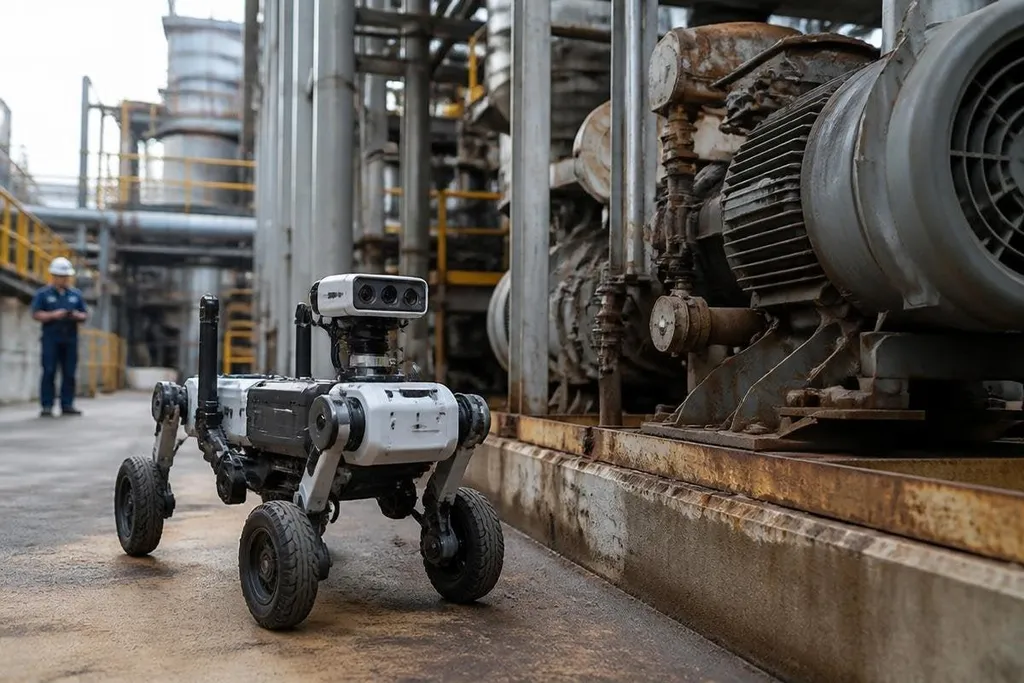
A robot that spots a hot bearing or a cracked weld can prevent a costly shutdown. One that only records hours of video creates another inspection job. The global race matters because factories need useful evidence, not a faster way to collect noise.
- Cameras find visible damage, leaks, missing parts, and changes in surface condition.
- Thermal sensors show heat differences that an ordinary camera cannot see.
- A useful system must connect each finding to a place, time, image, and repair decision.
What inspection robots actually do
Inspection robots move through spaces where people may face height, heat, radiation, dust, water, or traffic risks. Their bodies vary by task: a wheeled robot can cover a plant floor, a drone can reach a roof, and a crawler can follow a tank wall or pipe.
The sensing hardware decides what the robot can find. A visible-light camera records surface damage. A thermal camera measures heat patterns. LiDAR sends out laser pulses to build a map, which helps the robot locate itself and return to the same point later.
That repeat visit matters. An inspector can compare an image from Monday with one from a later shift, but only if the robot records the same position and viewing angle. A small location error can make a harmless change look like a new fault.
The hard part is the inspection record
The robot may move on its own, yet the inspection still needs a clear chain from sensor reading to human action. The record should show what the robot saw, where it saw it, when it saw it, and how the system marked the result.
This is where many product claims need care. A camera can detect a color change. That doesn't prove corrosion. A thermal image can show a hot spot. It doesn't prove that a motor needs replacement.
The system needs a rule, a comparison, or a person who checks the finding. For a plant manager, the useful question is simple: can the robot cut time spent on routine checks while keeping people responsible for repair decisions? Coverage alone doesn't answer that.
Why the global race is difficult to judge
Companies may use the same word, autonomous, for very different systems. One robot may follow a planned route and stop when an obstacle appears. Another may choose its route, identify a possible fault, and send the finding into a maintenance system.
Those steps should be measured separately. A system can move well and read surfaces poorly. Another can detect faults in a test area but struggle with glare, rain, dust, poor lighting, or a changing floor layout.
Inspection claims need the robot model, test site, task, and date beside the result. Robot 24 can give you that record, so a short demo becomes one piece of evidence rather than the whole case.
The missing evidence matters most when a maker shows a short demonstration. A clean floor and a fixed target tell you little about repeat visits, false alarms, battery changes, blocked routes, or the work needed to label inspection data.
What buyers should ask before a trial
A trial should produce records that maintenance staff can use after the robot leaves the site. Ask for these points in writing:
- Target fault: Which damage types can the system find, and which ones remain outside its tested range?
- Sensor record: Does each finding include the raw image, temperature reading, map position, and time?
- Repeat accuracy: How closely can the robot return to the same inspection point?
- Site limits: What happens around stairs, water, glare, dust, people, and temporary equipment?
- Human review: Who checks a flagged fault before a repair order is created?
- Trial measure: Which result decides success: fewer manual hours, fewer missed faults, faster checks, or another stated number?
A buyer should also ask for the false-alarm rate. Ten flagged objects may sound useful until nine turn out to be harmless stains, reflections, or normal heat from a working motor.
The next proof point
Inspection robots will earn wider use through repeatable records and clear limits. The system that returns to the same asset, finds a real change, and gives a technician enough evidence to act has a stronger case than one that only finishes a route.
I'd skip any trial that measures distance covered but never reports missed faults and false alarms. The next useful comparison is not which robot moves fastest; it is which one gives a maintenance team fewer uncertain decisions.